

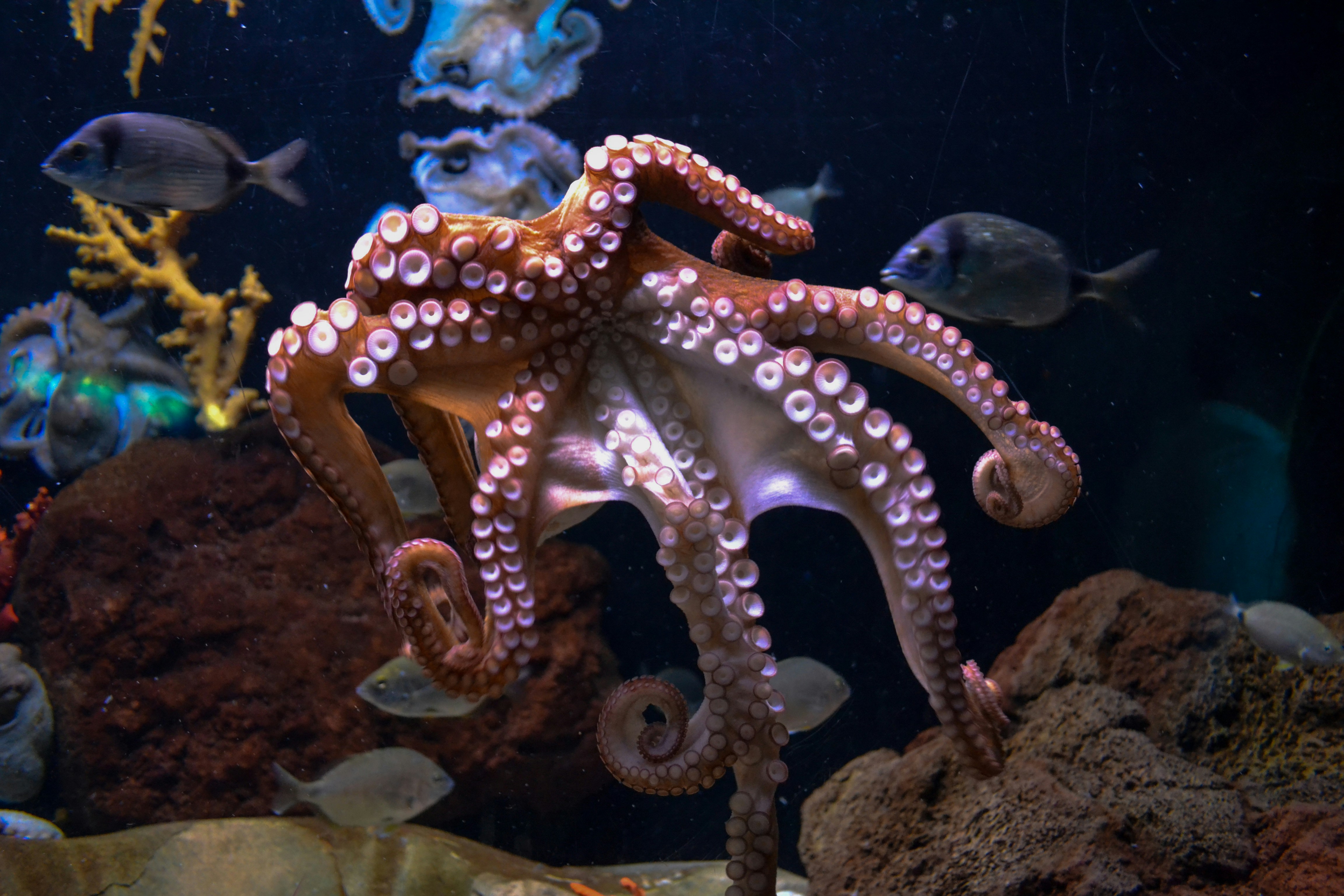
Did You Know? Octopuses Have Three Hearts
Imagine having not one, not two, but three hearts beating inside you. Sounds like science fiction, right? For octopuses, it’s just everyday life under the sea.
Why Three Hearts?
An octopus has one main heart that pumps blood around its body. The other two hearts are dedicated to the gills, where they help move blood to pick up oxygen from the water.
Here’s the twist: when an octopus swims, the main heart actually stops beating. That’s why octopuses prefer crawling along the ocean floor instead of swimming long distances — it’s less exhausting for their unusual circulatory system.
The octopus doesn’t just think differently — it beats differently too.
And Their Blood Is Blue
If three hearts weren’t strange enough, octopus blood is blue. Instead of iron (like humans have in hemoglobin), they use a copper-based protein called hemocyanin to transport oxygen.
- Three hearts
- Blue blood
- Nine brains (one central, eight in the arms)
- Highly flexible, boneless bodies
That copper-based blood actually works better in cold, low-oxygen environments — perfect for deep ocean living. It’s a reminder that evolution doesn’t aim for “normal.” It aims for what works.
Why It Matters
Octopuses are masters of adaptation. Their unique biology helps scientists study everything from neurology to soft robotics. Nature often solves problems in ways we’d never expect.
Next time someone says “follow your heart,” you can ask: which one?